Manual Therapy in North Kansas City: What a Hands-On Session at Birch Actually Feels Like
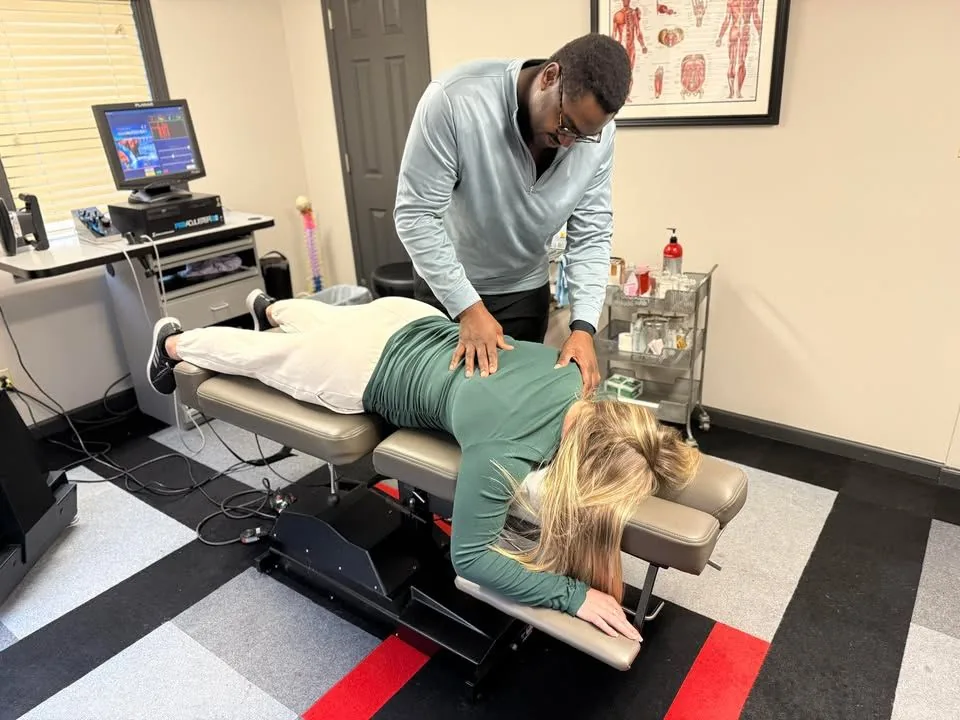
If you've only ever had a quick adjustment and walked out, the next visit at Birch may feel different. Manual therapy in North Kansas City is one of the main reasons people stick with Birch Chiropractic & Rehab after that first appointment. It's not a machine doing the work. It's hands on tissue, joints, and movement patterns that aren't cooperating.
Here's what it looks like in our Northland office on NE Shady Lane, how it fits with the rest of care, and how payment works here so you're not surprised at the desk.
What manual therapy means at Birch
Soft tissue, joints, and movement
Manual therapy is a broad term. At Birch, it usually means soft-tissue work, joint mobilization, and guided movement layered on top of chiropractic care. Dr. John Birch treats every patient himself, so the hands-on portion is tuned to what he finds that day, not a scripted ten-minute protocol.
You might feel steady pressure on tight muscle bands. Slow joint mobilizations that don't crack anything. Light stretching while you breathe through a sticky range of motion. Cueing so you can feel the difference when a muscle finally lets go.
How it pairs with other care
It's often paired with chiropractic care, sports rehabilitation, or decompression therapy when discs or nerve irritation are part of the picture. The manual therapy page on our site goes deeper on how that hands-on work is used here.
How manual therapy fits with adjustments in the Northland
Adjustments help restore motion where segments are stuck. Manual therapy helps the soft tissue around those segments stop fighting the correction. Skip the tissue work and some people stiffen back up before they get to the parking lot. Do only massage and never address the joint, and the relief can be short-lived.
We use both when it makes sense. Same visit. Same plan. No handoff to a different provider. That matters if you've been bounced between offices before and felt like nobody owned the whole picture.
North Kansas City traffic doesn't help either. Commutes that keep one shoulder hiked, desk days that lock your mid-back, and weekend sports at local fields all load the same tissues. Manual therapy gives those tissues a chance to change instead of just getting "clicked" and sent back into the same pattern.
Who tends to benefit
Desk workers whose upper traps feel like concrete by Thursday. People who sit through Northland traffic with their head poked forward at the windshield. Athletes rehabbing after a strain. Anyone recovering from a fall or auto accident who needs more than a quick pop.
There's a specific complaint we hear a lot: "I get adjusted and it helps for a day, then everything locks again." If that last one is you, the missing piece is often soft tissue and motor control, not more force on the adjustment.
Manual therapy also helps when scar tissue, guarded movement after injury, or long-standing postural strain is keeping a joint from holding its correction. It's not a luxury add-on. It's part of how the body actually changes.
If you've tried adjustments alone and keep sliding back into the same tightness by midweek, say that at the first visit. That pattern is useful information, not a failure on your part.
What a session with Dr. John Birch feels like
Assessment first
You'll talk through what flared up. Dr. John Birch looks at how you move, bending, turning, reaching, and compares that to what you're feeling. Then the hands-on work starts on the areas that are actually limiting you, not just the spot that hurts loudest. Sometimes the driver is one segment up or down from where you point.
Time, pressure, and what "normal" sore feels like
Most visits run about 20 to 30 minutes once you're an established patient. New visits take longer because they include the full consultation and exam. You shouldn't leave feeling wrecked. Sore in a "we worked something" way is normal. Sharp pain is not. Tell him if something doesn't feel right mid-session. Communication is part of the treatment, not an interruption.
If sports rehab or decompression is already in your plan, the manual therapy portion supports those goals instead of competing with them. Everything is built around what your body is doing that day.
Dry needling and acupuncture are also available in-house when they fit. That doesn't mean everyone gets every tool. It means Dr. Birch can choose without sending you across town.
Payment and insurance at Birch
Birch does not accept insurance. Care is set up with flexible payment options instead, so you're not fighting a plan that only covers part of what you actually need.
What to do before you book
Call the office before your first visit and ask what a new patient visit includes and how payment works for your situation. If you use an HSA or FSA card, ask whether that fits. We'd rather answer those questions on the phone than leave you guessing at checkout.
There's a New Patient Special listed on the site when you're ready to start. Claim details and what it covers can change, so confirm when you call or book.
When to come in vs. when to wait
Come in if tightness keeps returning after adjustments, if a strain isn't settling with rest, or if daily tasks like looking over your shoulder to merge feel limited. Same if you're rehabbing and progress has stalled.
Urgent care or ER first if you had a serious fall with head impact, can't bear weight, have chest pain, or notice rapidly worsening numbness or weakness. Manual therapy is for musculoskeletal problems once you're medically stable, not a substitute for emergency care.
Common mistakes before people try hands-on care
Waiting until pain is unbearable. Soft tissue that has been braced for months takes longer to change than tissue you catch early.
Assuming every "massage" is the same. Relaxation massage and targeted manual therapy aren't interchangeable. One feels nice. The other is aimed at a specific restriction tied to how your spine and joints are moving.
Pushing through bad pain at the gym the night before a visit. If something is hot and irritable, say so. The plan that day might be quieter hands and more assessment, not deeper pressure.
Skipping home advice between visits is another one. A few simple movement cues often matter as much as the hands-on time. Ask if you're unsure what to do on off days.
Fall in the Northland and why tissue stays tight
October in North Kansas City brings cooler mornings, more indoor desk time, and weekend projects that stack bend-and-reach reps you don't count. Leaf cleanup, garage cleanouts, and youth sports on chilly fields all load the same upper back and hips that already sit through the commute.
None of that replaces an exam. It just explains why a restriction that felt manageable in August can feel stuck by mid-October, and why hands-on work plus the adjustment often beats either one alone.
If weekend projects are already on the calendar, mention them at the visit. Knowing what's coming helps Dr. Birch decide whether that day's work should be deeper tissue work, quieter hands, or more movement cueing before you load the same spots again.
Ready to book
Birch Chiropractic & Rehab is at 409 NE Shady Ln Dr, Kansas City, MO 64118. Call (816) 491-8000, or use the contact page. Hours are Monday through Thursday 9 to 6 and Friday 8 to 12. Dr. Birch sees patients personally. No handoffs. If you're coming from elsewhere in the Northland, plan a few extra minutes for parking so the visit itself isn't rushed.
FAQ
Is manual therapy the same as massage?
Not exactly. Massage is often broader and relaxation-focused. Manual therapy here is aimed at specific restrictions tied to how your spine and joints are moving. Both can involve hands on tissue, but the intent and the assessment behind them differ.
Do I need manual therapy every visit?
Not always. Some days the adjustment is enough. Other days the tissue work is the priority. Dr. Birch decides based on what he finds, not a package you bought.
Does it hurt?
It can be uncomfortable on stubborn spots. It shouldn't be sharp or alarming. Say something if the pressure feels wrong. We'd rather ease off than push through bad pain.
How long until I notice a difference?
Some people feel freer the same day. Others need a few visits before the tissue stops guarding. Your history, how long the problem has been around, and what you do between visits all matter.
Can manual therapy help after an auto accident?
Often yes, when soft tissue and joint restrictions are part of the picture. Care is individualized after the exam, and it may be combined with other services under one roof.
Do you accept insurance?
No. We offer flexible payment options instead. Call before your visit so we can walk through what fits your situation, including HSA or FSA if you use those.
Visit our North Kansas City clinic
409 NE Shady Ln Dr, Kansas City, MO 64118 · Mon–Thu 9:00am–6:00pm, Fri 8:00am–12:00pm