
Why Tension Headaches Pick Up in November, and What a Chiropractor Can Do About Them
TL;DR
- Clocks fall back one hour on Sunday, November 1. That shift, plus darker evenings, more screen time and holiday stress, is a common recipe for tension headaches.
- Tension headaches often start with tight muscles in the neck, shoulders and upper back, which is where hands-on care can help.
- At Birch Chiropractic & Rehab, Dr. John Birch combines adjustments, manual therapy and at-home exercises so the work continues between visits.
- A sudden, severe or unusual headache needs a medical check first.
If your headaches seem to show up on schedule every November, you're not imagining it. The weeks after the time change ask a lot of your neck and shoulders. You lose your usual rhythm, you spend more evenings indoors on a laptop or phone, and the calendar starts to fill with holiday plans.
As a headache chiropractor in North Kansas City, Dr. John Birch treats neck pain and tension headaches. Here is why it happens, what you can try at home, and where hands-on care and rehab exercises fit.
What Is a Tension Headache?
A tension headache is the most common type of headache. It usually feels like a dull, steady pressure or a tight band around the forehead, temples or back of the head. Many people also notice sore, tight muscles in the neck and tops of the shoulders.
Tension headaches are different from migraines. A migraine often throbs, sits on one side, and can come with light sensitivity, nausea or visual changes. Some people deal with both. If you aren't sure which you have, that is something to sort out at your first visit and with your primary care doctor.
Why Do Headaches Get Worse in November?
Headaches tend to pick up in November because several stressors land at once: the time change shifts your sleep, shorter days push you indoors and onto screens, and holiday planning adds stress. Each one adds a little more load to the muscles of the neck and upper back.
The November 1 time change
On Sunday, November 1, clocks fall back an hour. It sounds like a free hour of sleep, but for a lot of people it scrambles bedtime and wake time for a week or more. Short or uneven sleep is a common headache trigger, and kids waking up an hour early don't help.
Darker afternoons and more screen time
By mid-November it is dark before many people leave work. More of the evening moves indoors and onto a couch, a laptop or a phone. When your head drifts forward to look at a screen, the muscles at the back of your neck and the base of your skull work harder to hold it up. Over a few hours, that can turn into a headache.
Cold weather posture
When it is cold, people tend to hunch their shoulders up toward their ears. You may do it walking from the parking lot or scraping a windshield without noticing. That held tension adds up.
Holiday stress
Travel plans, hosting, shopping lists and end-of-year deadlines at work all show up in November. Stress often shows up in the body as clenched jaws and tight shoulders.
What Can I Do at Home to Head Off Tension Headaches?
A few small changes go a long way, especially in the first couple of weeks after the time change.
- Protect your sleep. Keep your bedtime and wake time as steady as you can, including weekends.
- Raise your screen. Bring your laptop or monitor up so the top of the screen is near eye level. Hold your phone higher instead of dropping your chin to it.
- Take movement breaks. Every 30 to 45 minutes, stand up, roll your shoulders back, and gently turn your head side to side.
- Drink water. Indoor heat and a busy schedule make it easy to forget.
- Notice your shoulders. When you catch them up near your ears, let them drop.
Our recent post on posture correction exercises walks through a few simple moves you can do at your desk.
How Can a Headache Chiropractor in North Kansas City Help?
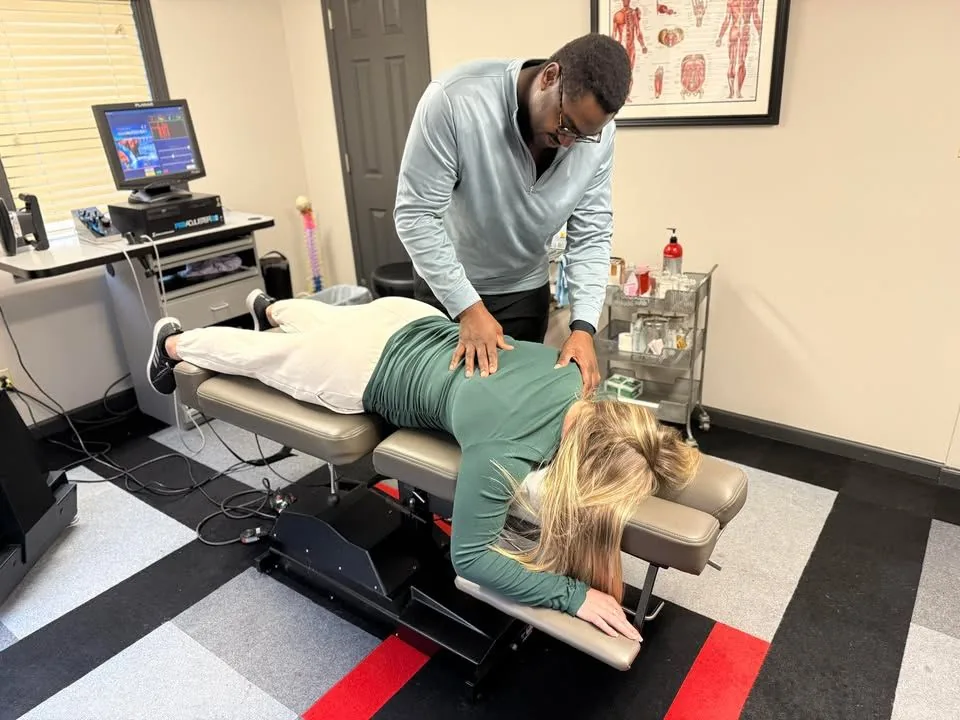
A chiropractor helps tension headaches by working on the tight muscles and stiff joints in your neck and upper back that often feed them, and by giving you exercises to keep those areas moving between visits. At Birch, that usually means a mix of adjustments, hands-on soft tissue work and rehab exercises, chosen after an exam.
Chiropractic adjustments
Dr. Birch looks at how your neck and upper back are moving. Our chiropractic care page lists neck pain and tension headaches among the concerns it helps with. Adjustments can be done by hand or with an activator, depending on what you're comfortable with. Some patients notice fewer headaches over time. Every case is different, and Dr. Birch will tell you plainly what he expects for yours.
Manual therapy
Hands-on work for the muscles of the neck, shoulders and upper back is often a big part of headache care. Our manual therapy service is built for exactly this kind of problem, and headaches from tight neck and shoulders are one of the reasons people book it. If you want to know what a session feels like, read our post on manual therapy in North Kansas City.
Dry needling
For some patients, Dr. Birch may suggest dry needling for stubborn tight spots. Mild soreness for about a day afterward is normal.
Where Do Rehab Exercises Fit?
Rehab exercises are what keep the progress going between appointments. Hands-on care can loosen tight tissue, but if the same posture and habits keep pulling it tight again, the headaches tend to come back.
That is why Dr. Birch often pairs treatment with stretches and strengthening work to do at home. These usually focus on:
- The deep muscles in the front of the neck that help hold your head up
- The muscles between and below your shoulder blades
- Gentle stretches for the upper traps and the base of the skull
He will show you each exercise during your visit and adjust the plan as you improve. One patient, Chris, wrote in his Google review that Dr. Birch explained the root cause of his problem and how he could help himself at home. That is the goal for headache patients too.
What Happens at Your First Visit?
Your first visit starts with a full consultation, where Dr. Birch asks about your headaches: when they started, where you feel them, how often they show up and what seems to trigger them. Then comes a neurological exam and an Insight scan, followed by personalized recommendations. Dr. Birch treats every patient personally.
Regular treatment sessions usually take 20 to 30 minutes. You don't need a referral to come in.
If you already know your headaches are tied to an old neck problem, our earlier post on headache and migraine treatment goes deeper into root causes.
How Much Does It Cost, and Do You Take Insurance?
We do not accept insurance, but we offer a variety of flexible payment options. We accept Visa, Mastercard, Discover, Apple Pay, Google Pay and cash. If you have questions about cost, contact our office before your visit and we'll walk you through it.
New patients can start with a complimentary consultation. You can see what is included on our new patient page. There are no hidden fees and no long-term commitment.
When Should a Headache Be Checked by a Doctor Right Away?
Some headaches are emergencies and should not wait for a chiropractic visit. Get medical care right away if you have:
- A sudden, severe headache that feels like the worst of your life
- A headache after a fall or a blow to the head
- A headache with fever and a stiff neck
- Weakness, numbness, confusion, trouble speaking or vision changes
- A new headache pattern that keeps getting worse
Chiropractic care works alongside your medical care, not instead of it.
Book a Visit at Birch Chiropractic & Rehab
Birch Chiropractic & Rehab
409 NE Shady Ln Dr, Kansas City, MO 64118
(816) 491-8000
Hours
Monday through Thursday: 9:00am to 6:00pm
Friday: 8:00am to 12:00pm
Book your visit or call us at (816) 491-8000.
Frequently Asked Questions
Can a chiropractor help with tension headaches?
Many tension headaches are tied to tight muscles and stiff joints in the neck and upper back, which is what chiropractic care and manual therapy work on. Results vary from person to person. Dr. Birch will explain what he finds and what he expects for you.
How do I know if my headache is a tension headache or a migraine?
Tension headaches usually feel like steady pressure or a tight band. Migraines often throb, sit on one side, and can come with nausea or light sensitivity. Dr. Birch will ask about your symptoms at your first visit, and your primary care doctor can help with a diagnosis.
Does the time change really cause headaches?
The time change itself isn't the only cause, but it can throw off your sleep for a week or more, and poor sleep is a common headache trigger. Keeping a steady bedtime helps.
How long does a session take?
Most treatment sessions take 20 to 30 minutes. Your first visit takes longer because it includes the consultation and exam.
Do you take insurance?
We do not accept insurance. We offer flexible payment options and accept Visa, Mastercard, Discover, Apple Pay, Google Pay and cash. Contact our office before your visit if you have questions.
How many treatments will I need?
It depends on how long you've had headaches, what is driving them and how your body responds. Dr. Birch will give you a recommendation after your exam and adjust it as you go.
Visit our North Kansas City clinic
409 NE Shady Ln Dr, Kansas City, MO 64118 · Mon–Thu 9:00am–6:00pm, Fri 8:00am–12:00pm