
Posture Correction Exercises: Can Chiropractic Care Improve Posture and Neck Pain?
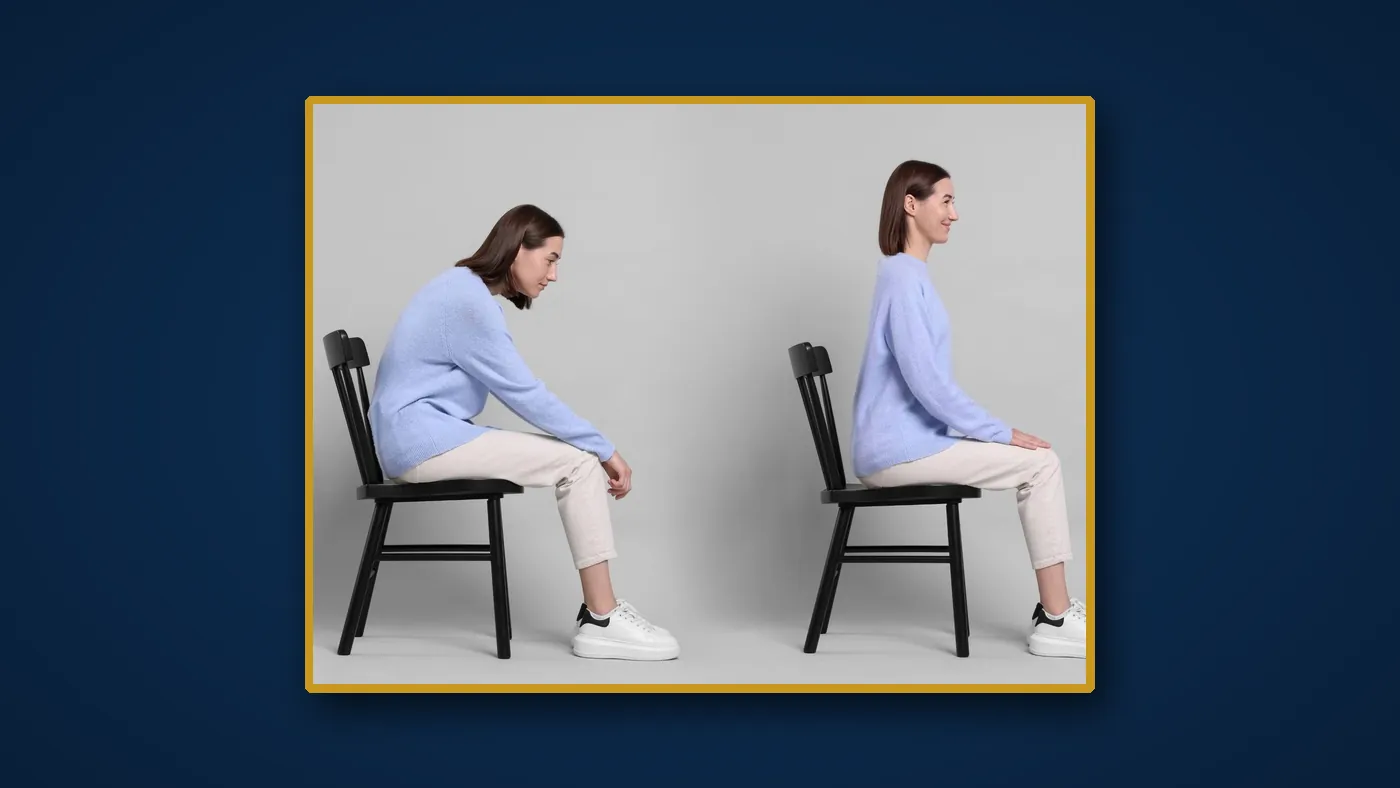
Your shoulders roll forward. Your head drifts toward the screen. By late afternoon your neck aches and a headache is building at the base of your skull. If that sounds familiar, you are dealing with one of the most common complaints we see at Birch Chiropractic & Rehab in North Kansas City.
The good news is that posture correction exercises genuinely work for most people, and we are going to give you a complete set below with clear instructions. The honest caveat is that exercises alone sometimes stall, particularly when joint restriction or entrenched muscle imbalance is part of the picture. Founded in 2021, our Northland practice has worked with plenty of Kansas City patients who did everything right at home and still needed hands-on care to break through. Here is how to tell which camp you are in.
As the days get shorter and Kansas City evenings move indoors, screen time climbs and posture habits get worse. Good timing to address it.
Why Forward Head Posture Causes Neck Pain
Understanding the mechanism makes the exercises make sense.
Your head weighs roughly 10 to 12 pounds in a neutral position, balanced directly over your shoulders. The muscles of your neck and upper back barely have to work to hold it there.
When your head shifts forward, the mechanics change. Your head is now acting as a lever arm, and the muscles at the back of your neck have to contract continuously to stop it from dropping toward your chest. The further forward it goes, the harder those muscles work and the more compressive load passes through the lower cervical joints.
The downstream effects are predictable:
- Suboccipital muscles at the base of the skull stay in constant contraction, which is why headaches often start right there
- Upper trapezius and levator scapulae become chronically tight and tender
- Deep neck flexors at the front of the neck weaken from disuse
- Mid-back and scapular stabilizers lengthen and lose strength
- Chest muscles shorten, pulling the shoulders further forward
The Cleveland Clinic notes that sustained poor posture is among the most common contributors to neck pain, and that correcting it generally requires both habit change and targeted strengthening.
That last part matters. You cannot stretch your way out of this. The tight muscles are tight because the weak ones are not doing their job.
Posture Correction Exercises You Can Start Today
Here is a complete set. Start with the first four and add the rest as they become easy. Aim for five days a week.
1. Chin Tucks
The single most useful exercise for forward head posture, because it directly strengthens the deep neck flexors.
How to do it: Sit or stand tall. Without tilting your head up or down, glide your head straight back as if making a double chin. You should feel a stretch at the base of your skull and light work at the front of your neck. Hold 5 seconds, release.
Reps: 10 repetitions, 2 to 3 times daily.
Common mistake: Tipping the chin down instead of gliding the head back. Keep your eyes level throughout.
2. Scapular Retraction (Shoulder Blade Squeezes)
How to do it: Sit or stand with arms relaxed. Draw your shoulder blades back and down, as if tucking them into your back pockets. Avoid shrugging up. Hold 5 seconds, release.
Reps: 12 repetitions, 2 times daily.
3. Doorway Pec Stretch
Tight chest muscles pull the shoulders forward and undermine everything else you are doing.
How to do it: Stand in a doorway with your forearm on the frame, elbow at roughly shoulder height. Step forward gently until you feel a stretch across the front of your chest and shoulder. Hold 30 seconds per side.
Reps: 2 to 3 sets per side, daily.
4. Upper Trap and Levator Stretch
How to do it: For upper trap, tilt your ear toward your shoulder and hold 30 seconds. For levator, turn your head about 45 degrees toward your armpit, then look down, and hold 30 seconds. Keep the opposite shoulder relaxed down.
Reps: 2 sets per side, daily.
5. Prone Y-T-W
Strengthens the mid-back muscles that hold your shoulders in position.
How to do it: Lie face down with your forehead resting on a towel. Lift your arms off the floor in a Y shape (overhead), hold 3 seconds, lower. Repeat in a T shape (straight out to the sides), then a W shape (elbows bent, squeezing shoulder blades).
Reps: 8 of each position, once daily.
6. Wall Angels
How to do it: Stand with your back, head, and arms against a wall, elbows bent at 90 degrees. Slowly slide your arms up overhead while keeping contact with the wall, then back down. If you lose contact, you have found your limit.
Reps: 10 slow repetitions, once daily.
7. Thoracic Extension Over a Foam Roller
Forward head posture almost always comes with a stiff upper back.
How to do it: Place a foam roller horizontally across your mid-back. Support your head with your hands, and gently extend backward over the roller. Move the roller up or down an inch and repeat.
Reps: 5 extensions at 3 positions, daily.
The American Council on Exercise recommends combining mobility work with postural strengthening rather than relying on stretching alone, which is exactly the structure above.
How Long Until You See Results?
Honest timelines, assuming consistency:
- Weeks 1 to 2: Increased body awareness. You start catching yourself slouching. Pain may not change much yet.
- Weeks 3 to 6: Noticeable reduction in end-of-day neck aches for most people. Headache frequency often drops.
- Weeks 6 to 12: Measurable postural change. Holding good position starts requiring less conscious effort.
- Beyond 12 weeks: Position becomes closer to default rather than something you maintain deliberately.
Two things change this timeline. How long the pattern has been in place, and whether joint restriction is involved. A 25-year-old who developed this over two years moves faster than someone with twenty years of accumulated adaptation.
When Exercises Alone Are Not Enough
This is the part most posture articles leave out.
Exercises work on muscles. They do not restore motion to a joint that has become genuinely restricted. If specific segments of your cervical or thoracic spine have lost their normal range, you can strengthen around them indefinitely without resolving the underlying problem.
Signs that you likely need hands-on assessment:
- You have been consistent for 6 to 8 weeks with no meaningful change
- Pain radiates into your shoulder, arm, or hand
- You get numbness or tingling anywhere in the arms
- Headaches are frequent or severe
- Certain neck movements are sharply limited or painful
- Symptoms are disrupting your sleep
In these cases, restoring joint motion first usually makes the exercises start working. The muscles were fighting a mechanical problem.
How We Assess Posture at Our North Kansas City Clinic
Dr. John Birch, DC does not eyeball your posture and hand you a sheet of exercises. The assessment includes:
- Static postural analysis from front, side, and back, measuring forward head translation, shoulder height asymmetry, scapular position, and pelvic alignment
- Cervical range of motion in all six directions, noting which movements are limited and whether limitation is painful
- Segmental palpation to identify which specific joints have lost normal motion, rather than treating the whole region generically
- Deep neck flexor endurance testing to establish a strength baseline
- Thoracic mobility assessment, since upper back stiffness drives forward head posture
- Orthopedic and neurological screening when symptoms suggest nerve involvement
From there, treatment typically combines adjustments to restore joint motion, manual therapy to release the tight tissue, dry needling for stubborn trigger points, and a progressive exercise program. Our corrective rehabilitation approach is built around making the changes stick rather than providing temporary relief.
Because Dr. Birch personally treats every patient and we do not double-book, this assessment gets the time it requires. You can read more about his approach.
Will Fixing Posture Resolve My Neck Pain?
For a large portion of posture-related neck pain, yes. When the mechanical cause is addressed and the supporting muscles are strengthened, symptoms typically resolve.
But we want to be straight with you: not all neck pain is postural. Disc problems, arthritis, old injuries, nerve compression, and other conditions can produce similar symptoms. Posture work helps some of these and does nothing for others.
That is why assessment matters. If your neck pain is not postural in origin, we will tell you, and if it falls outside chiropractic scope we will refer you to the appropriate Kansas City provider.
Pairing Posture Work With Core and Back Strength
Posture is not just a neck issue. A weak core and mid-back allow the whole upper body to collapse forward, undoing your neck work from below. Our guide to back strengthening exercises covers the foundation that posture work sits on.
Why North Kansas City Patients Choose Birch Chiropractic & Rehab
- Founded in 2021 with a focus on personalized, root-cause care
- Measured postural assessment, not a quick visual glance
- Dr. Birch, DC personally treats every patient, never handed off to assistants
- We never double-book, so assessments get real time
- Multiple modalities under one roof: chiropractic, rehab, decompression, dry needling, acupuncture, and manual therapy
- Honest about what posture work can and cannot fix
You can read what real patients say about their experience on our Google Business Profile.
Visit Our North Kansas City Clinic
Birch Chiropractic & Rehab
409 NE Shady Ln Dr, Kansas City, MO 64118
Phone: (816) 491-8000
Hours: Mon-Fri, 9:00 AM to 6:00 PM
Website: birchchirokc.com
Try the Exercises. If You Stall, Come See Us.
Start with the exercises above. Give them six to eight weeks of real consistency. Many Kansas City patients get the results they need from exactly that.
If you plateau, or if your symptoms include radiating pain, numbness, or frequent headaches, a proper assessment will tell you what is actually going on.
Call (816) 491-8000 or claim your New Patient Special online. You can also reach us through our contact page.
Frequently Asked Questions
Can a chiropractor actually fix my posture, or is it just exercises?
Both, and they address different problems. Exercises strengthen weak muscles and stretch tight ones. Chiropractic adjustments restore motion to joints that have become restricted. When restriction is present, exercises alone often stall because the muscles are working against a mechanical limitation.
How long does posture correction take to show results?
Most people notice increased awareness in 1 to 2 weeks, reduced pain by weeks 3 to 6, and measurable postural change by weeks 6 to 12. Longstanding patterns take longer than recent ones.
Will fixing my posture get rid of my neck pain and headaches?
For posture-related neck pain and tension headaches, usually yes. However, not all neck pain is postural. Disc problems, arthritis, and nerve compression can cause similar symptoms and require different treatment, which is why assessment matters.
Do I need an in-person assessment or can I just do these at home?
Start at home. The exercises above are safe for most people. Seek an assessment if you have no change after 6 to 8 weeks, or if you have radiating pain, numbness or tingling in the arms, frequent headaches, or sharply limited neck movement.
How often should I do posture exercises?
Aim for five days a week. Chin tucks and scapular retractions can be done 2 to 3 times daily since they are brief. The strengthening work can be done once daily.
Can posture exercises make things worse?
Done correctly and progressively, they are low risk. If an exercise causes sharp pain, radiating symptoms, or numbness, stop and get assessed rather than pushing through.
About the author: Dr. John Birch, DC is the owner and treating chiropractor at Birch Chiropractic & Rehab in North Kansas City, Missouri. He founded the practice in 2021 and personally treats every patient. Learn more about Dr. Birch.
Birch Chiropractic & Rehab proudly serves North Kansas City, the Northland, and the greater Kansas City metro area. This article is for informational purposes and does not replace professional medical advice or diagnosis. Consult a healthcare provider before beginning a new exercise program, particularly if you have existing injuries or conditions.
Visit our North Kansas City clinic
409 NE Shady Ln Dr, Kansas City, MO 64118 · Mon–Thu 9:00am–6:00pm, Fri 8:00am–12:00pm